


 Enquire
 Call
Call
 chat
chat
Global Inspiration, Local Impact: What India Can Learn from Leading Gifted Education Programmes
By lodha
September 04, 2025
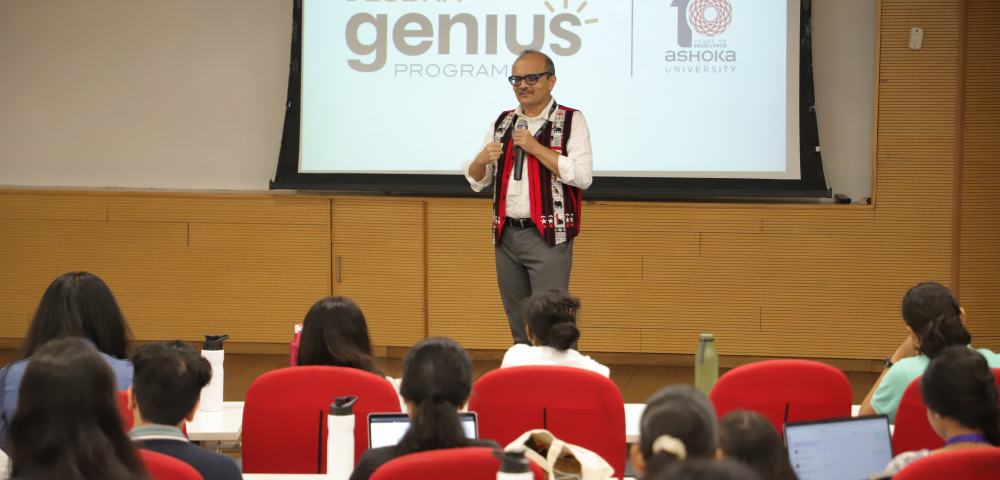
Around the world, high-potential learners are being nurtured in environments that challenge, inspire, and accelerate their abilities. Institutions such as PROMYS, MIT PRIMES, and Oxford STEM Outreach have long set the benchmark in how gifted education should be delivered—through a scholarship, depth, mentorship program, and independence. These programmes don’t just produce academic success stories—they build original thinkers, early researchers, and lifelong learners.
India, with its rich intellectual reservoir, is uniquely positioned to benefit from such a model. Yet, the structures needed to identify and guide gifted children remain sparse. In response to this gap, the Lodha Genius Programme (LGP) emerges as a future-forward initiative that is both globally inspired and locally relevant—offering Indian students a gateway to excellence rooted in the best of global practices.
What Sets the World’s Best Gifted Programmes Apart?
Across successful international models, three elements consistently define excellence: enrichment, acceleration, and mentorship.
- Enrichment involves providing intellectually challenging material that goes beyond textbook learning—encouraging curiosity, lateral thinking, and independent research.
- Acceleration allows students to move ahead of traditional academic timelines, engaging with content that matches their cognitive readiness rather than their chronological age.
- Mentorship creates opportunities for guided exploration by connecting students with scholars, experts, and real-world practitioners.
Take PROMYS, for example. It’s known for immersing students in mathematical exploration through intensive problem-solving sessions that promote original thinking. MIT PRIMES, on the other hand, integrates high school students into genuine mathematical research projects, often leading to co-authored academic publications. These programmes do not simply extend classroom learning—they redefine what it means to learn.
Translating Global Excellence to the Indian Context
India’s education system operates under different constraints. With its vast scale, socio-economic disparities, and exam-focused approach, the task of IQ testing and adapting gifted education models requires more than replication—it demands reinvention.
While many Indian students possess the intellectual capacity to benefit from enrichment and acceleration, they are rarely recognised. Standardised testing does not capture abstract reasoning or creative problem-solving. Further, most educators lack exposure to gifted pedagogies. Without appropriate tools and frameworks, gifted children—especially in underserved communities—remain unseen.
Thus, India needs customised, culturally grounded gifted programmes—models that honour global benchmarks while responding to national realities.
The Lodha Genius Programme: A Globally Informed Indian Initiative
The Lodha Genius Programme bridges this gap by translating international best practices into a context-sensitive, inclusive framework for Indian learners.
1. Curriculum Grounded in Global Thinking
LGP incorporates principles from top global models like PROMYS and MIT PRIMES, focusing on conceptual depth and cross-disciplinary exploration. The learning modules encourage inquiry, creative problem-solving, and independent thought—ensuring students move beyond rote content and into real-world thinking.
2. Identification That Goes Beyond Grades
Recognising giftedness in its many forms, LGP follows a multi-faceted evaluation process. In addition to aptitude tests, the programme includes interviews, behavioural observation, and referrals. This approach ensures gifted learners from diverse backgrounds are included—even those who may not excel in conventional school metrics.
3. Personalised Learning and Acceleration
Once identified, each child embarks on a tailored academic journey, paced to their ability and interests. Whether delving into advanced mathematics, emerging technologies, or critical theory, students are encouraged to move ahead of age-based curriculum structures.
4. Mentorship-Driven Growth
One of LGP’s cornerstones is its access to thought leaders, researchers, and innovators. Through a mentorship program and project-based learning, students are not only guided but inspired. These real-world connections allow them to visualise academic knowledge as a tool for societal impact.
5. Emotional Well-being and Community Engagement
Gifted children often experience emotional complexity and social disconnect. LGP supports this through counselling, peer groups, and training sessions for both parents and educators, ensuring each child is surrounded by understanding and supportive stakeholders.
The Need for Homegrown Excellence
India’s diversity requires solutions that are not only high in quality, but flexible in form. Programmes like LGP that may act as scholarships for students, show that we can offer gifted learners a world-class experience—without sending them abroad or conforming to imported templates. By combining rigorous academic design with cultural sensitivity, LGP becomes a prototype for how India can scale gifted education nationally.
It also raises an important point: brilliance exists in every classroom, but opportunity doesn’t. The future depends on changing that.
Reimagining India’s Gifted Future
The global examples are clear. When young minds are given access to acceleration, enrichment, and mentorship, the results are extraordinary. The Lodha Genius Programme takes that insight and applies it where it matters most: here at home.
By localising international excellence and making it accessible to Indian learners, LGP is not just keeping pace with the world—it is setting a new standard for what gifted education in India can be.
Because when potential is nurtured early, its impact is limitless.



Recent Blogs
 Lodha Life
 Lodha Industrial Park
 Design & Architecture
