


 Enquire
 Call
Call
 chat
chat
Is Your Child Gifted? 10 Signs That May Reveal Extraordinary Potential
By lodha
August 26, 2025
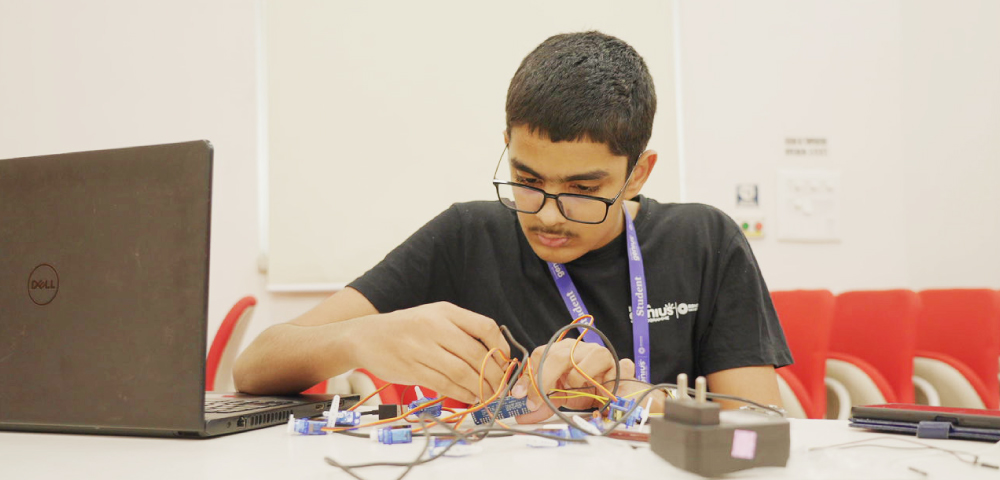
Giftedness isn’t always obvious. It doesn’t always look like top marks, a scholarship, or trophies. In fact, many gifted children may not stand out at all in a conventional classroom. Their brilliance often lies in how they think, how they feel, and how they question the world around them.
For parents and educators alike, identifying giftedness early can have a profound impact on a child’s development. But recognising it requires a lens that looks beyond IQ testing or academic performance. Here are ten traits that often appear in gifted children—along with guidance on what steps to take if these characteristics feel familiar.
1. A Deep Curiosity About the World
Gifted children are naturally inquisitive. They ask frequent, often complex questions that go far beyond their age level. These aren’t just factual queries—they seek to understand cause, consequence, and meaning. This constant thirst for knowledge is often an early marker of exceptional cognitive engagement.
2. Advanced Language and Communication
A gifted child may speak fluently or use mature vocabulary at an early age. They might demonstrate a nuanced understanding of language, tone, or metaphor—engaging in conversations that feel far beyond their years.
3. Emotional Depth and Sensitivity
These children often feel emotions more intensely than their peers. Whether it’s a deep sense of justice, strong empathy, or frustration with perceived unfairness, their emotional world is as rich and complex as their intellectual one. However, this depth can also make them more prone to anxiety or self-doubt if unsupported.
4. Exceptional Memory
An unusually strong memory is another potential sign. Gifted children often recall information with clarity—whether it's something they’ve read, heard, or experienced months prior. This trait enables them to draw connections and explore ideas more thoroughly.
5. Uneven Development
A hallmark of giftedness is what experts call asynchronous development. A child may be well ahead in one area, such as reasoning or vocabulary, but still developing in others—like fine motor skills or emotional self-regulation. This can create a unique set of challenges and strengths.
6. Unconventional Problem Solving
Gifted learners often approach challenges from unexpected angles. They may enjoy complex puzzles, strategy games, or conceptual “what-if” scenarios. It’s not just that they find answers quickly—it’s how creatively they arrive at them.
7. Intense Focus and Intrinsic Motivation
When engaged in something meaningful, these children can sustain focus far beyond what’s typical for their age. They often exhibit self-motivation, diving into projects or subjects independently and persistently.
8. Vivid Imagination
Creative thinking is another key indicator. A gifted child may immerse themselves in imaginative play, storytelling, or design. They invent new games, craft detailed narratives, or blend ideas from different fields—often without prompting
9. Heightened Sensory Awareness
Some gifted children experience the world with greater sensitivity. Loud noises, strong smells, or certain textures might overwhelm them. At the same time, they may have a keen eye for aesthetic details or enjoy music and rhythm at an intuitive level.
10. Social Preference for Older Individuals
Many gifted children gravitate towards older peers or adults. They may seek out more sophisticated conversation or feel more comfortable around those who share their intellectual curiosity or emotional maturity.
Giftedness ≠ High Performance
It’s important to note: gifted does not always mean high achieving. A high achiever thrives within structure, excels at schoolwork, and earns external rewards. A gifted child, however, may resist traditional systems, become disinterested in routine tasks, or struggle when unchallenged. Their intelligence may not manifest in conventional ways—but it is no less valid.
When to Consider Further Evaluation
If your child shows a combination of these traits—especially if they’re emotionally withdrawn, chronically under-stimulated, or out of sync with their environment—it may be time to seek a professional assessment. Giftedness is multifaceted, so testing or suitable scholarships for students should ideally explore not only cognitive ability but creativity, reasoning, and emotional development.
An accurate diagnosis opens doors to appropriate support—and prevents gifted children from being mislabelled or misunderstood.
The Role of the Lodha Genius Programme
The Lodha Genius Programme (LGP) is a mentorship program purpose-built to support gifted children and their families through this journey. LGP recognises that giftedness often doesn’t fit into a single definition, which is why its identification process includes aptitude tests, observational tools, and expert interviews.
Once admitted, students benefit from:
- Tailored academic pathways aligned to their learning style and interests.
- Exposure to global pedagogies inspired by MIT PRIMES, PROMYS, and Oxford STEM Outreach.
- Immersive learning environments with maker spaces, research opportunities, and mentorship.
- Emotional wellness frameworks, including support systems for parents and educators.
LGP ensures that each gifted child has the environment, tools, and guidance to thrive—not only academically, but personally.
Recognising Potential Starts at Home
Giftedness is not about perfection—it’s about perception, sensitivity, and originality. By tuning into your child’s unique way of learning and feeling, you take the first step in helping them flourish.
And with the right ecosystem, brilliance doesn’t need to wait. It simply needs to be seen.



Recent Blogs
 Lodha Life
 Lodha Industrial Park
 Design & Architecture
